Join a small-circle tea ceremony in Melbourne that includes a short sigil introduction, thoughtful discussion, and guided sigil-making. The Aquarian Tea Party hosts an intimate gathering shaped by shared space, presence, and reflection.
We begin by making and drinking tea, and we let the scent and warmth settle the mind and open room for deeper thought. Everyone meets one another inside a calm, shared rhythm. The group follows that rhythm without rushing it.
Tea serves as more than refreshment here; it supports slower perception and steadier attention. Silence and conversation alternate without strain. The circle arrives fully through that simple pacing.
From that stillness, we move into a brief 12-minute video introduction to sigils. A sigil uses symbols shaped by intention—letters, marks, and geometries arranged to hold a clear inner statement. Many esoteric, mystical, and philosophical traditions have used sigils as focal points for meditation, inner alignment, and energetic inquiry.
The film contrasts symbolic and geometrical sigils and includes forms drawn from sacred geometry. It also looks at contemplative, protective, and balancing uses. We touch on several families of forms, including the triangle, hexagram, the Flower of Life, and related patterns that carry long-standing metaphysical associations.
A Gentle Process and Slow Talk
After the video, we hold a guided discussion that aims for depth rather than consensus. The room makes space for nuance, interpretation, and careful listening. People speak with curiosity and restraint.
We keep the tone reflective instead of declarative, and we stay open instead of certain. This circle suits people who enjoy ideas with texture. It also suits those who can sit with mystery without turning it into a slogan.
We close by making personal sigils with gentle guidance. The process centres on clarity of intention, symbolic coherence, and embodied awareness, not on dramatic outcomes. No experience is required; curiosity and patience carry you far.
What is a Sigil?
Sigils sit in an interesting place between art and self-talk. They do not function like “art” in the usual sense, and they do not function like affirmations either. A sigil gives an inner statement a body.
Start with wording that tells the truth. Choose something you can stand behind rather than something you wish sounded impressive. Try statements such as “I keep my attention intact,” “I move through conflict with composure,” or “I choose the clean next step.” These statements do not try to control the world; they train the part of you that makes choices.
Next, compress the sentence until only the structure remains. Some traditions remove repeated letters, while others keep only the strongest words. Keep the aim simple: preserve the essence and drop the speech.
Then shape what remains into a form. The first drafts can feel arbitrary, yet pattern-recognition works faster than paragraph-reading. A coherent mark gives your nervous system something it can hold. Simple lines often land better than ornate designs because a sigil needs clarity, not glamour.
Three approaches to designing a sigil
People tend to use three broad approaches. Letter-based sigils suit anyone who likes language. You keep a faint relationship to the original statement even after stylising it, which helps you remember what you meant and refine it later.
Symbol-based sigils rely on icons instead of letters. For example, a circle can suggest containment, a vertical line can suggest will, and a gate shape can suggest threshold. Define your symbols as you go, or the mark turns decorative instead of meaningful. Build a personal shorthand that stays consistent enough to hold weight.
Geometric sigils rely on structure. Symmetry can calm the mind, and repetition can stabilise attention. A triangle can suggest direction and focus, while a hexagram can suggest the integration of opposites. The Flower of Life can suggest coherence and continuity. You do not need belief in sacred geometry to notice how proportion and pattern affect attention.
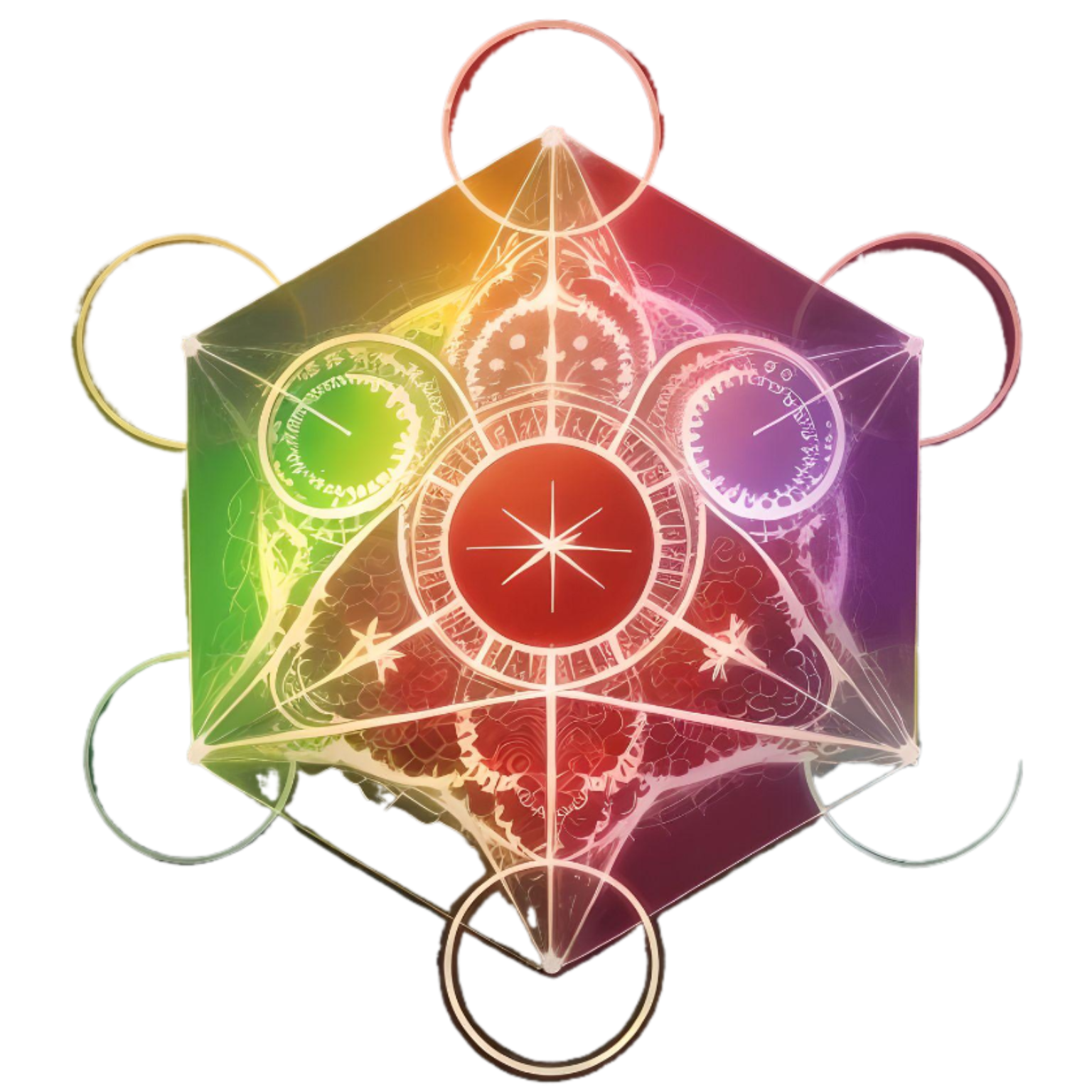
Choosing an Intention and How to Activate a Sigil
Aesthetics matter, but they matter in a grounded way. Strong sigils often have a centre, a rhythm, and a clear boundary. Overly sprawling designs lose force, and overly generic designs lose life. Aim for the sweet spot between noise and emptiness.
After you create a sigil that feels accurate, decide how you want to work with it. Many people use the word “charge,” but the act can stay very plain. Give the sigil a short, focused span of attention. Trace it slowly, breathe with it, and keep it in view while your mind settles around the intention. The strength comes from clean attention, not from forcing a mood.
Next, choose placement based on the relationship you want. A journal keeps the work intimate. A desk turns the sigil into a cue for focus. A doorway can carry a simple reminder such as “When I cross this line, I cross with integrity.” The mark works as a designed prompt that keeps you oriented.
You can also retire a sigil when you outgrow it. You might revise the original statement after you notice a subtle mismatch. Treat that shift as refinement, not failure. Sigil work becomes more interesting when it stays honest, precise, and aligned with what you can truly mean.